Studies undertaken by:
Natasha Collia, MD, Adrienne L. Davis, MD, MSc (PEM Physicians Feedback Study)
Sevag Tachejian, MD, Adrienne L. Davis, MD, MSc, Natasha Collia, MD (LP Success Rates Study)
Division of Pediatric Emergency Medicine, The Hospital for Sick Children


STUDY ONE
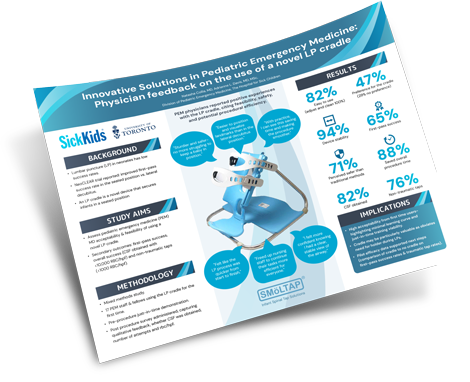
Innovative Solutions in Infant Lumbar Punctures:
Physician feedback on the use of a noval LP cradle
Background
- Lumbar puncture (LP) in neonates has low success rates
- NeoCLEAR trial reported: improved first-pass success rate in the seated position vs. lateral decubitus
- An LP cradle is a novel device that secures infants in a seated position
Aims
- Assess pediatric emergency medicine (PEM) MD acceptability & feasibility of using a novel LP cradle
- Secondary outcomes: first-pass success, overall success (CSF obtained with <10,000 RBC/hpf) and non-traumatic taps (<1000 RBC/hpf)
The Results

Easy to use
(adjust and clean 100%)

First-pass success

Perceived safer than traditional methods

Saved overall procedure time

CFS obtained

Non-traumatic taps

PEM physicians reported positive experiences with the LP cradle, citing feasibility, safety, and potential procedural efficiency.

STUDY TWO
To Cradle or Not to Cradle: Can the Use of a Lumbar Puncture Cradle Increase Lumbar Puncture (LP) Success Rates?
Background
- Lumbar puncture (LP) success rates are low (50-80%), while traumatic taps occur in 30-50%
- Missed LPs have multiple implications for patients & the healthcare system
- The seated position has been shown in some studies to increase LP success rates
Aims
- To evaluate the use of a LP cradle on first-pass success rates on neonatal and infant LPs compared to lateral decubitus (primary)
- Secondary aims were to compare overall LP success rate for >1 attempt and traumatic LP rates with and without the cradle
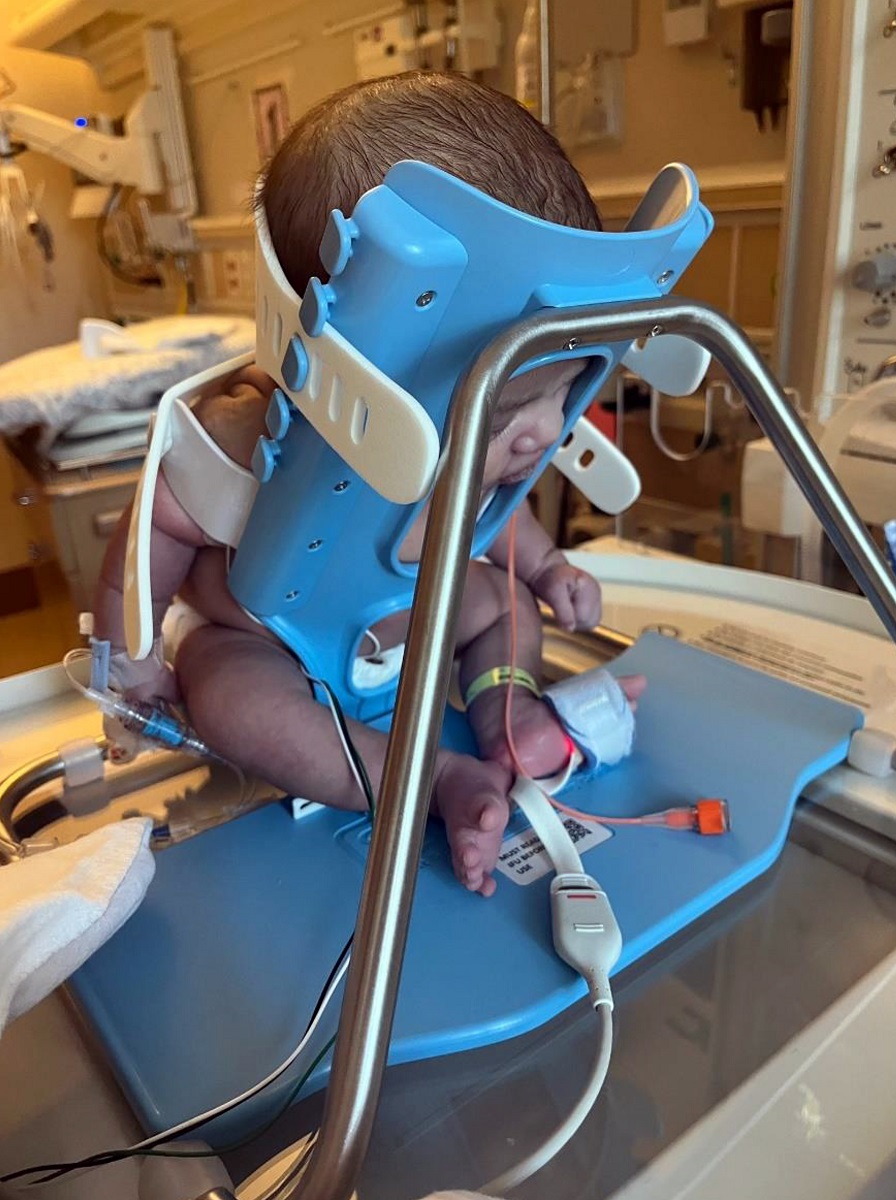
The use of our lumbar puncture cradle, compared to the lateral decubitus method, resulted in:
An absolute increase of 22% of first-pass lumbar puncture success (63% vs 41%)
An absolute decrease of 23% of traumatic lumbar punctures (36% vs 59%)
The Results
PRIMARY OUTCOME
| Cradle | Lateral Decubitus | Difference (95% CI) | |
| First-pass success | 45/71 (63%) | 29/71 (41%) | 22% (5.6-36.8) |
χ2 (1, 142) = 7.22, p=0.007
SECONDARY OUTCOME
| Cradle | Lateral Decubitus | Difference (95% CI) | |
| Overall success rate | 51/71 (80%) | 50/71 (70%) | 10% (-4.3-23.8) |
| Traumatic puncture rate ( > 400 RBCs/uL “Bloody”) | 25/69 (63%) | 41/70 (59%) | 23% (6.6-37.8) |
Study Conclusions
High acceptability from first time users highlighting minimal learning curve and just-in-time training viability.
Cradle may be particularly valuable as obviates need for holder during LPs.
Pilot efficacy data supported next steps (comparison of cradle to no cradle on first-pass success rates & traumatic tap rates).
Revolutionizing Infant Lumbar Punctures: A Breakthrough in Pediatric Care
Discover how the Smoltap positioning device is transforming infant lumbar punctures.
offering a 94% success rate, eliminating the need for sedation, and significantly reducing complications. Backed by clinical data and presented at the 12th International SPIR Meeting, this innovation could redefine procedural standards in paediatrics. Listen to the abstract and explore the evidence and implications for your practice.