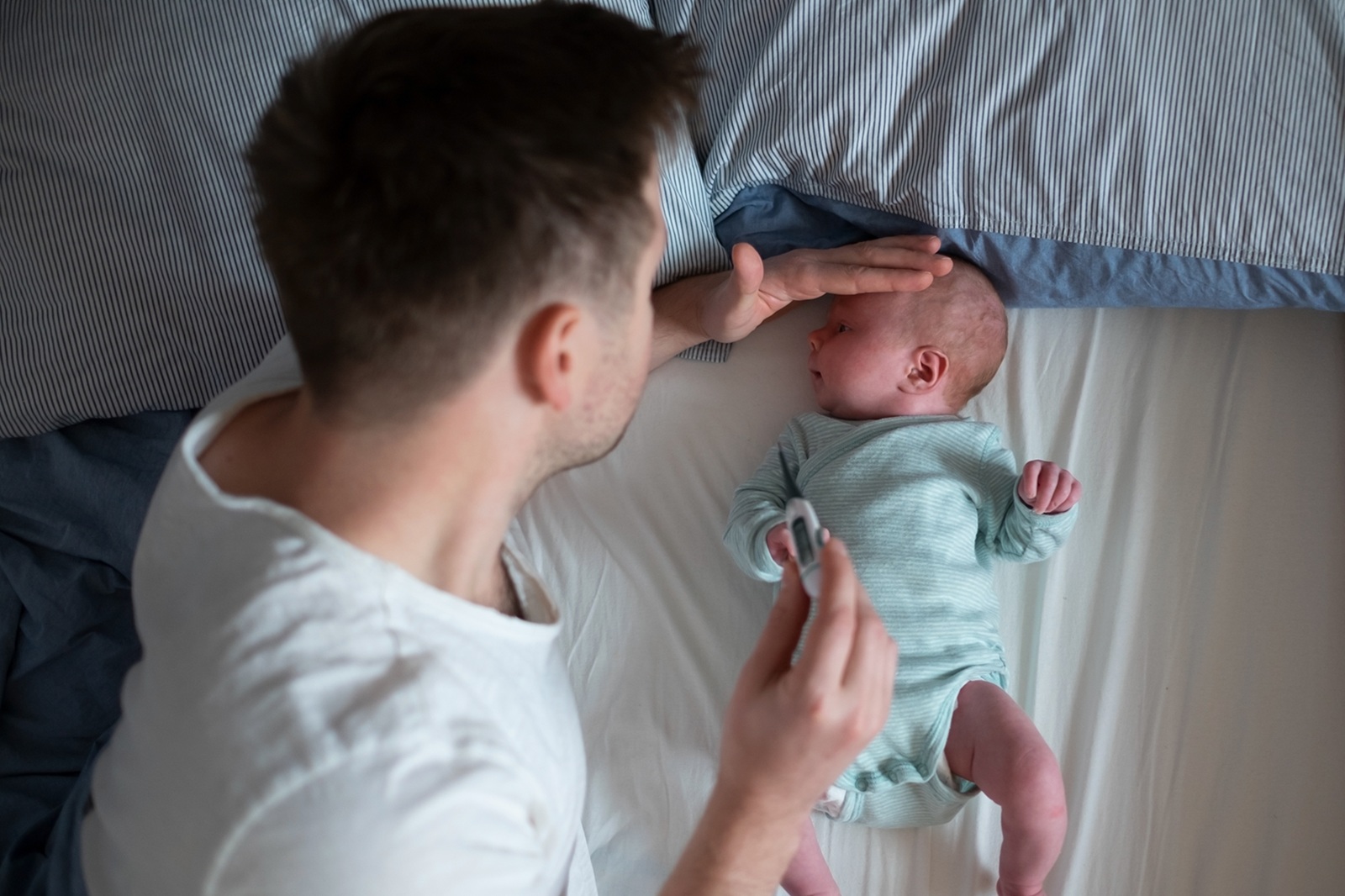
What to do if your baby is 2 months or younger and has a fever of 100.4°F (38°C) or higher
Call your doctor. They may tell you to go to the emergency room.

While at the emergency room, the care team will examine your baby.

The care team may recommend a spinal tap (lumbar puncture).
Why Might My Baby Need a Spinal Tap?
Although hearing the words “spinal tap” can be frightening, the procedure is often one of the fastest and most reliable ways to determine whether your baby has a serious infection that requires immediate treatement.
Doctors may recommend a spinal tap to:
- Rule out meningitis, a serious infection of the lining around the brain and spinal cord
- Look for signs of sepsis, a life-threatening infection that can spread quickly in young infants
- Diagnose infections that blood tests alone cannot detect
- Start the right treatment as quickly as possible, especially when every minute matters
You’re Not Alone!
Hearing that your baby may need a spinal tap can be overwhelming. It’s normal to have questions and concerns. We’re here to help you understand the procedure, know what to expect, and feel more prepared every step of the way.
That’s why we created SMoLTAP, to bring comfort not just to your baby, but to you as a parent.
FAQs
How long does it take?
A spinal tap typically takes about 30 minutes.
Does it hurt?
Doctors will typically apply a local numbing agent on the skin where the needle will be inserted in order to minimize any discomfort. During the procedure the infant may experience minor discomfort. A sucrose solution (sugar & sterile water) is sometimes given to the infant soothe and ease discomfort.
What’s recovery like?
Recovery time is typically fast, 24-48 hours. The infant may have a headache or backache for a day to two after the test. A doctor may apply a bandage at the location of the procedure. It can be removed in 24 hours.
When do results come back?
Results normally take 48-72 hours, but some testing may yield results in as little as 30 minutes. When meningitis is suspected, the doctor may start your infant on an antibiotic in advance of receiving results
Is it Safe?
A lumbar puncture is a safe test and has been performed successfully for decades. It should be performed by a qualified healthcare professional in an appropriate medical setting, like a hospital or emergency room.
What if the procedure isn’t successful
Sometimes the procedure is not successful. In this case, usually one of 2 things has happened:
- no fluid was obtained during the procedure, or
- the fluid sample may have some blood in it.
When blood is present, the sample may still be useful for testing.
In either case, the procedure may be repeated if considered not successful the first time. Failure to obtain CSF should not delay antibiotic treatment.
If the doctor suspects bleeding, he/she may order a cranial ultrasound or other imaging. This can make the procedure more challenging for healthcare professionals to complete.
What happens during your child’s procedure
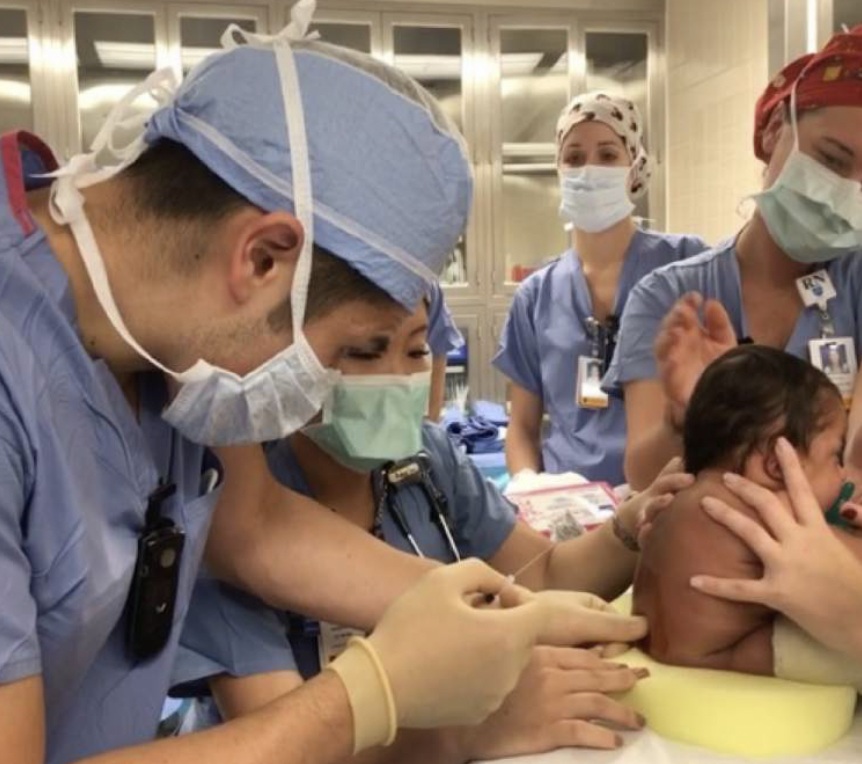
With a lumbar puncture, a doctor will insert a needle into the lower lumbar region of the infant’s lower back, below the end of the spinal column. The needle is used to extract a small amount of cerebrospinal fluid (CSF), which is then sent to a lab for testing.
Most parents don’t realize there may be different ways an infant spinal tap is performed. While the purpose is always the same, the way your baby is positioned can vary depending on the hospital and the tools available. A traditional spinal tap is also not always successful on the first try, some babies need to be poked more than once.
You have a choice in how this is done, it’s worth asking your care team about their positioning approach and how many attempts they typically allow before trying something different and if they have a SMoLTAP available.
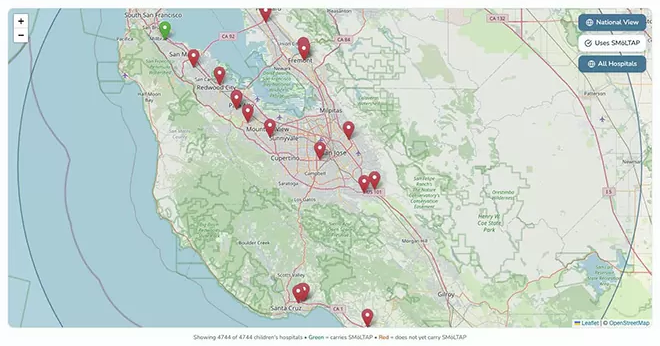
Find a SMoLTAP Near You